



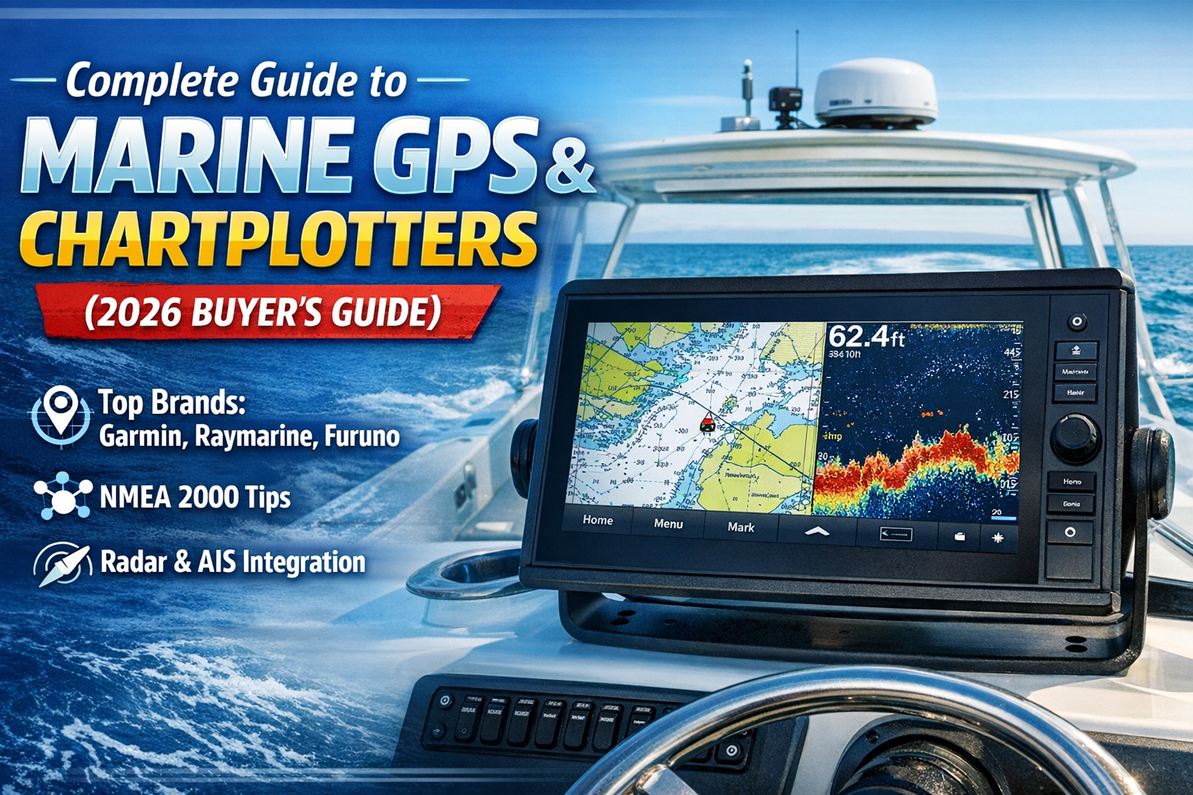
Complete Guide to Marine GPS & Chartplotters (2026 Buyer’s Guide)
Choosing the right marine GPS or chartplotter can dramatically improve navigation safety, fishing success, and offshore confidence. With brands like Garmin, Raymarine, Furuno, and Navionics offering powerful systems, the options can feel overwhelming.
This complete 2026 guide will help you choose the right marine GPS system for your boat.
What Is a Marine GPS Chartplotter?
A marine GPS chartplotter combines:
- GPS positioning
- Digital nautical charts
- Depth sounder integration
- Radar compatibility
- AIS tracking
- NMEA 2000 networking
Unlike automotive GPS units, marine systems are waterproof, sunlight-readable, and designed for harsh saltwater conditions. Explore full product selection in Marine Navigation & Instruments.
Chartplotter vs Fishfinder: What’s the Difference?
| Feature | Chartplotter | Fishfinder | Combo Unit |
|---|---|---|---|
| GPS Navigation | ✅ | ❌ | ✅ |
| Sonar | ❌ | ✅ | ✅ |
| Charts | ✅ | ❌ | ✅ |
| Radar Support | ✅ | ❌ | ✅ |
Screen Size Guide
- 5–7 inch: Small boats, kayaks
- 7–9 inch: Center consoles under 25’
- 10–12 inch: Offshore fishing boats
- 16+ inch: Multi-display helm systems
Top Marine GPS Brands Compared
Garmin
Best for user-friendly interface and advanced sonar.
Raymarine
Excellent for radar integration and sailing features.
Furuno
Commercial-grade durability and performance.
Do You Need NMEA 2000?
If you want engine data on screen, fuel monitoring, wind instruments, or autopilot integration, yes. NMEA 2000 accessories allow electronics to communicate seamlessly.
Radar & AIS Integration
For offshore boaters, radar and AIS are critical safety upgrades. AIS allows you to see commercial vessel traffic. Radar helps navigate fog, darkness, and storms. Check Marine Radar for recommended models.
Freshwater vs Offshore Use
Inland lakes: Basic chartplotter + sonar, Inland lake maps
Coastal: Tidal charts, Radar capability, AIS recommended
Offshore: Redundant GPS, Radar, AIS transceiver, Satellite backup
Installation Tips
- Use proper marine-grade wiring
- Seal all mounting holes
- Ensure proper transducer placement
- Update charts annually
Frequently Asked Questions
When should I install a marine GPS?
Before your first offshore season or prior to any major boating trip.
Are Navionics charts worth it?
Yes. Updated charts improve safety and fishing accuracy.
Can I install it myself?
Yes for basic installs. Complex radar systems may require professional installation.
Final Buying Advice
Choose based on boat size, fishing style, budget, and expansion plans. Invest once. Buy scalable systems. Browse top-rated marine GPS systems in Marine Navigation & Instruments and Cartography.
Recent Posts
-
Complete Guide to Marine GPS & Chartplotters (2026 Buyer’s Guide)
Choosing the right marine GPS or chartplotter can dramatically improve navigation safety, fishing su …Feb 26th 2026